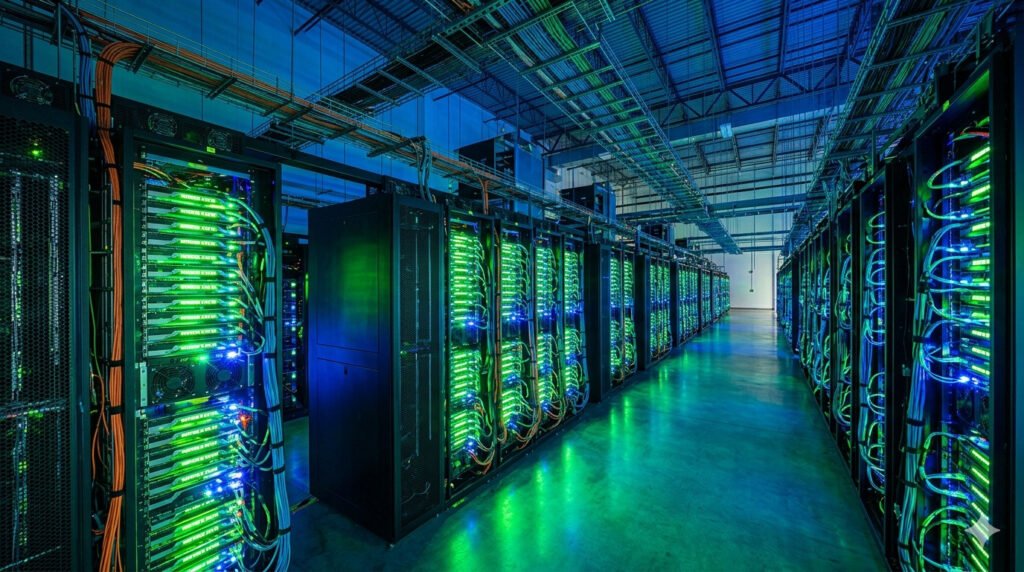
Real-time e-science requires processing streams of observational and simulated data as they arrive. Research domains from radio astronomy to climate modeling now depend on pipelines that can ingest, transform, and analyze hundreds of thousands of events per second. This paper explains how infrastructure evolved from classic grid models to distributed systems that include edge nodes, cloud services, and AI accelerators, and it provides practical guidance for building resilient, low-latency research pipelines.
Real-time research workloads differ from batch analytics in latency, variability, and state requirements. They demand predictable end-to-end behavior, fine-grained monitoring, and a clear operator model for handling failures. I draw on engineering practices used in large scientific facilities to outline architectures and operational patterns that meet those demands at scale.
Audience expectation is operational clarity. This paper targets senior architects, platform engineers, and research IT managers. It emphasizes data-driven design decisions, measurable tradeoffs, and an infrastructure roadmap you can adopt or adapt for production research pipelines.
Real-Time e-Science: Processing High-Velocity Data
Real-time e-science moves computation to the point where data velocity and volume would otherwise overwhelm central systems. Instead of collecting raw streams and processing them later, systems apply filtering, compression, and feature extraction close to sensors or acquisition gateways. This reduces downstream bandwidth and enables early detection of scientific events.
Processing pipelines must treat data as a continuous flow rather than discrete jobs. That shift influences component design: stream processors need per-key state, exactly-once semantics where feasible, and backpressure mechanisms to avoid cascading overload. Choosing the correct processing guarantees is an engineering decision tied to scientific accuracy and cost constraints.
Measurement and provenance matter. Every transformed record should carry metadata about processing steps, software versions, and timing. That metadata enables reproducibility, supports quality control, and allows researchers to validate results against scientific criteria rather than implementation details.
Architecting Distributed Systems for Stream Ingestion
Designing a distributed ingestion layer starts with clear delineation of responsibilities: edge, aggregation, storage, and compute. Edge components perform sensor protocol handling and initial filtering, aggregation nodes normalize and partition streams, storage offers durable retention, and compute layers run analytics or model inference. Each layer must expose standardized interfaces to simplify ops and upgrades.
Partitioning strategy drives performance. Use logical keys that match domain semantics to ensure locality of stateful processing. Combine partitioning with adaptive routing so spikes produced by a subset of sources do not cause global hotspots. Instrument throughput and latency at partition granularity to guide rebalancing decisions.
Network design is a determinant of cost and latency. Use dedicated links for telemetry where possible, and implement QoS policies to prioritize time-sensitive streams. Where physical connectivity is constrained, use store-and-forward mechanisms with strong checksums and incremental state checkpoints to preserve scientific integrity in the presence of intermittent connectivity.
From Grid Computing to Edge-Cloud Convergence
Grid computing provided the first workable model for federated resource sharing across institutions. Its job-centric model mapped well to batch simulations and parameter sweeps, but it did not address continuous streams or localized preprocessing needs. Understanding that limitation motivates the shift to systems that combine edge nodes, cloud elasticity, and centralized archives.
Modern deployments retain grid principles such as federation, authentication, and distributed scheduling, but they augment them with container orchestration, function runtimes, and data-plane fabric. This hybrid approach allows research facilities to run low-latency logic near instruments while relying on cloud platforms for elastic AI training and long term archiving.
Operationally, teams must reconcile identity, governance, and data locality across administrative domains. Implementing a federated policy model prevents siloing of datasets and reduces duplication. The engineering challenge is to provide seamless movement of processing tasks and datasets while maintaining reproducibility and audit trails.
Data Management and Storage Strategies for Streams
A robust storage strategy balances hot, warm, and cold tiers against expected access patterns and cost. Hot storage lives at the edge or in regional caches for immediate processing. Warm storage holds time-windowed datasets for reprocessing and debugging. Cold storage archives raw observations and derived products for long term science preservation.
Choosing formats and serialization affects throughput and compute efficiency. Use compact binary formats with well-defined schemas and support for schema evolution. When performance matters, favor append-optimized logs and columnar formats for analytical reads. Ensure each stored chunk includes checksums and provenance metadata for scientific validation.
Simple comparison table showing typical tradeoffs:
| Characteristic | Grid Era (Batch) | Modern Stream Architecture |
|---|---|---|
| Latency | High | Low to sub-second |
| Resource Model | Job-based queues | Continuous compute with autoscaling |
| Data Location | Centralized archives | Edge caches, regional stores, central archives |
| State Management | Minimal | Per-key state, persistent checkpoints |
Operational Practices: Monitoring, Resilience, and Security
Operational readiness begins with telemetry that maps directly to scientific SLOs rather than only infrastructure metrics. Track event latency percentiles, event loss, and pipeline completeness. Correlate these metrics with domain-level indicators such as detection sensitivity to make operational alerts meaningful for researchers.
Design resilience for predictable failure modes: network partitions, hardware failures at edge sites, and cloud instance preemption. Use replicated ingress points, state checkpointing, and idempotent processing to limit data loss. Automate failover paths and rehearse them with scheduled drills so teams can restore throughput within the agreed SLO window.
Security and governance must preserve access controls without adding undue friction to scientific workflows. Employ federated identity, fine-grained data access policies, and encryption in flight and at rest. Audit ingestion and transformation steps so researchers can verify that datasets used for published results remain unchanged and traceable.
Infrastructure roadmap – 6 to 8 steps
- Inventory sources and characterize throughput, burst patterns, and reliability.
- Define SLOs and measurement strategy tied to scientific outcomes.
- Deploy edge gateways with initial filtering and standardized protocols.
- Implement stream fabric with partitioning, backpressure, and checkpointing.
- Integrate tiered storage for hot, warm, and cold data with provenance.
- Add orchestration for stateful processing and model inference.
- Roll out monitoring, alerting, and automated recovery playbooks.
- Establish governance, federation, and cost controls across domains.
FAQ: Technical Questions and Answers
Operational teams often ask whether to prioritize exactly-once processing semantics. For many scientific pipelines, at-least-once is acceptable if downstream deduplication exists and provenance tracks retries. Exactly-once guarantees add complexity and can increase latency; measure scientific impact before committing.
Another common question concerns stateful stream processing at the edge versus centralization. Keep short-term state near the ingestion point for latency-sensitive feature extraction. Move aggregated or large state to regional nodes with higher capacity. Design for state handoff and rehydration to support maintenance and scaling.
How do you validate machine learning models running in real time? Use shadow deployment where live traffic duplicates run through candidate models without affecting outputs. Compare detection rates and calibration metrics versus the incumbent model. Store inputs and outputs to enable offline validation and bias analysis.
What is the recommended way to handle schema evolution in continuous pipelines? Use explicit versioning and backward-compatible changes by default. Employ a schema registry and enforce compatibility rules during ingestion. When incompatible changes are unavoidable, coordinate rollout windows and provide adapters at the aggregation layer.
Real-time e-science demands an engineering approach that integrates distributed compute, edge preprocessing, and disciplined data management. The transition from grid computing to hybrid edge-cloud systems adds complexity but delivers the latency and flexibility modern research requires. Apply clear SLOs, partitioning strategies, and provenance practices to produce reliable, auditable scientific outputs.
Adoption is incremental. Start with a focused pilot that validates network bounds, SLOs, and operational playbooks. Expand to federated deployments once metrics prove the approach. Future work will refine model-in-the-loop operations and reduce human intervention with controlled automation.
Meta description: Real-time e-science architecture for high-velocity research streams: from grid origins to edge-cloud-AI pipelines, with roadmap, table, and FAQs.
SEO tags: real-time e-science, stream processing, edge computing, distributed systems, data ingestion, scientific workflows, infrastructure roadmap, provenance