Generative AI inference grids require explicit load balance semantics that treat each request as a high-frequency token stream rather than a one-time RPC, and operational teams must design systems that preserve per-session ordering and latency at scale.
Generative AI Inference Grids: Enterprise Load Design
Grid Topology and Edge Fabric
The grid topology must place inference stages close to the consumption edge to minimize round-trip latency and reduce token jitter across wide-area links. Architectural reality requires tiered aggregation: local edge GPUs or accelerators, regional inference clusters, and central model repositories, with clear latency SLAs per tier to avoid session dropouts.
Traffic engineering must include dedicated RPC lanes for token streaming, separate from bulk model fetch and telemetry to avoid head-of-line impacts. The data suggests isolating token-by-token streams on 100 Gbps+ fabrics with microburst smoothing and QoS, while control plane flows use lower priority lanes and scheduled synchronization windows.
Capacity planning for the topology must account for token peak concurrency, not just request count, because long conversations multiply socket occupancy and tie resources. Strategic Takeaway: provision based on peak concurrent token rate, expected tokens per session, and tail-latency targets, not merely nominal QPS.
Hardware and Thermal Constraints
Enterprises must size inference nodes for sustained token throughput, not batch peak throughput, given token-by-token delivery keeps GPUs active for extended windows. Silicon limits matter: A100-class or newer accelerators saturate PCIe and host memory when inference sockets remain open for hundreds of tokens, which impacts thermal envelope and power provisioning.
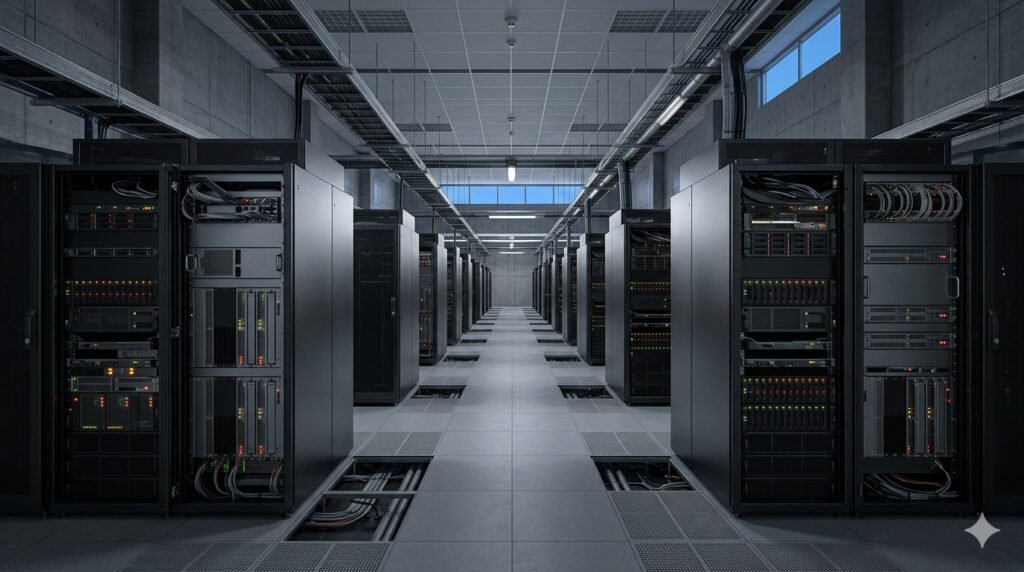
Thermal management must combine server-level cooling with rack-level airflow zoning to avoid throttles that increase tail latency during long sessions. Architectural reality requires planning for PUE variances and localized cooling headroom of at least 20 percent above nominal design to maintain steady-state token delivery under load.
Procurement cycles influence hardware refresh timing; order phasing must match predicted conversational growth to prevent mid-quarter shortages that raise spot-pricing by 30–45 percent. Strategic Takeaway: sync hardware acquisition cadence with token-growth forecasts and power grid constraints to stabilize unit economics.
This briefing for Grid Computing Now frames load balancer designs, network fabrics, and operational economics necessary to support token-by-token inference at enterprise scale, with hardware and procurement guidance grounded in 2026 constraints.
Token-by-Token Delivery: Architecting Inference LB
Session Affinity and Stream Consistency
Token-by-token delivery enforces persistent session affinity because each token often depends on prior hidden states that reside locally on the serving accelerator. Session affinity must use sticky routing with deterministic hashing, and architectural reality requires affinity persistence across failovers for at least the session chat window.
Affinity state must replicate to a local standby or persist in an in-memory checkpoint that a new node can restore within sub-50 ms to avoid conversational gaps. The data shows that stateless LB approaches produce tail latency spikes exceeding 200 ms when state rehydration hits the control plane.
Designers must balance affinity granularity against load spreading, using weighted hashing that considers accelerator utilization and thermal throttles. Strategic Takeaway: implement cost-aware affinity with hot-session migration thresholds and instrument per-node token hold times.
Load Balancer Algorithms and Backpressure
The LB must operate at microsecond decision time and provide backpressure when downstream accelerators approach sustained token saturation. Algorithms should combine least-loaded heuristics with token-window awareness to avoid packetizing tokens to overloaded devices.
Backpressure signaling requires explicit in-band control, such as HTTP/2 flow-control extensions or a lightweight gRPC token throttle, to keep client buffers from growing and to prevent TCP-level retransmission storms. Architectural reality requires LB-level admission control that enforces max concurrent sessions per accelerator and preempts low-value sessions under extreme load.
Implement congestion-aware rerouting that respects session affinity and avoids oscillation through exponential cooldown windows. Strategic Takeaway: prefer conservative shedding policies and measurable SLAs on token drop probability.
Hardware: provision for GPUs with >1.2 TB/s memory bandwidth, Network: standardize on PFC-capable fabrics, Finance: forecast 20–30% premium for spot accelerators under urgent procurement.
Network Fabric and Interconnect Strategies
East-West Switching and RDMA
East-west traffic dominates inference grids as model shards, embeddings, and hidden state move between accelerators during pipelined execution. The fabric must support RDMA over Converged Ethernet (RoCE v2) with tight coflow scheduling to reduce cross-traffic interference and maintain millisecond-level token RTT.
Switch architecture must include headroom for microbursts created by synchronized token bursts, and enterprises should use buffer-aware QoS and Active Buffer Management to reduce packet drop. The data suggests that inadequate buffer sizing increases 99.9th percentile latency by factors of two to three during synchronized flushes.
Implement multi-path routing with per-flow hashing aligned to session affinity to prevent out-of-order token delivery. Strategic Takeaway: standardize on 40/100/400 Gbps spine-leaf fabrics with deterministic ECMP and buffer telemetry.
WAN Edge and Egress Economics
WAN design must separate persistent token streams, which require low jitter, from bulk model synchronization that tolerates higher latency. The financial reality shows egress costs and peering constraints inflate operational spend when long token streams cross public cloud boundaries, particularly for large enterprises with hybrid deployments.
Options include colocating inference caches in major cloud regions, negotiating private interconnects, and using protocol compression for token frames to reduce egress. Architectural reality requires modeling egress as a variable cost tied to session duration, not simply to data volume, because long sessions drive sustained send rates.
Negotiate dedicated direct-connect or private backbone lanes where latency SLAs matter; otherwise, expect egress pricing variability up to 40% depending on region and provider. Strategic Takeaway: bake egress economics into placement decisions and chargeback models.
Orchestration, Scheduling, and Failure Domains
Predictive Scheduling and SLA Slicing
The scheduler must operate with token-awareness, predicting session length distributions and assigning reservations with soft guarantees to minimize preemption. Predictive scheduling uses historical token profiles, user tier, and business priority to slice SLAs and reserve headroom for high-value sessions.
Schedulers must expose APIs for SLA classes and allow FinOps to set cost-per-token caps that the scheduler enforces via admission control. Architectural reality requires real-time telemetry streams and a control loop with sub-second decision intervals to adjust allocations against thermal and power feedback.
Combine predictive models with hardened preemption rules to avoid cascading session interruptions during failures. Strategic Takeaway: adopt SLA slicing tied to monetary quotas and enforce them at the scheduler to control cost and risk.
Failure Isolation and Live Migration
Failure domains must be narrow to prevent large-scale session losses, and live migration should focus on checkpointed state transfer rather than full model movement. Hardware and network constraints demand node-level isolation, with redundant hot-standby accelerators that accept in-memory checkpoints within 100–200 ms.
Design migration to stream minimal state over RDMA and avoid reloading large model weights during token flow. The data shows migration approaches that transfer full model context increase mean downtime by factors of ten compared to state-only sync.
Implement layered health detection that differentiates transient packet loss from hardware errors to avoid unnecessary failovers. Strategic Takeaway: build migrations around lightweight state snapshots and verify restoration times in procurement SLAs.
Security, Compliance, and Multi-Tenancy Controls
Encryption, Key Management, and Secrets
Token streams carry sensitive conversational data, so transport and at-rest protections must interoperate with low-latency constraints. Use TLS 1.3 with session resumption and hardware crypto offload to avoid CPU bottlenecks, and place key management within HSM-backed vaults that support low-latency retrieval.
Key rotation policies must balance compliance windows and session persistence, allowing ephemeral session keys that do not require full reauthentication mid-conversation. Architectural reality requires careful design so encryption handshakes do not add more than 5–10 ms to per-token latency.
Audit trails must correlate tokens to session IDs without exposing plaintext to multi-tenant neighbors. Strategic Takeaway: enforce envelope encryption with per-session keys and hardware acceleration for cryptographic operations.
Tenant Isolation and Auditability
Multi-tenant grids must enforce isolation at network, process, and accelerator levels to prevent side-channel leaks and noisy neighbors from impacting token latency. Isolate tenants using hardware partitioning features and hypervisor-enforced QoS on shared GPUs where possible.
Auditability demands immutable logs that capture token ingress and egress timestamps, routing decisions, and load balancer metrics while preserving privacy. The data shows that systems lacking per-session telemetry struggle to diagnose tail-latency incidents within required compliance windows.
Implement tenant-aware throttles and billing meters that tie to token counts, latency tiers, and SLA classes. Strategic Takeaway: align isolation controls with chargeback meters to ensure security and financial accountability.
Operational Economics and FinOps for Inference Grids
Cost Modeling and Chargeback
Cost modeling must convert token streams into billable units that reflect compute time, memory residency, network egress, and persistent affinity costs. FinOps teams should define metrics: cost per 1,000 tokens, cost per active session-minute, and cost per tail-latency incident to create transparent chargeback.
Model variations must account for accelerator utilization curves, power tariffs, and cooling overhead; vendor price volatility and spot market dynamics can swing unit costs by 20–50 percent across quarters. The data says that ignoring tail-latency penalties underestimates true cost by at least 15 percent.
Implement automated daily reports that reconcile token billing with scheduler reservations and LB admission logs. Strategic Takeaway: price services on token economics and enforce budgets through admission control.
Capacity Planning and Procurement Signals
Procurement must balance lead times, silicon shortages, and power constraints, phasing orders to match modeled token growth and reserve cooling headroom. Use a tiered procurement plan: immediate spot for transient growth, medium-term contracts for stable capacity, and long-term commitments aligned with cloud discounts.
Power and space constraints force staggered rollouts; prioritize nodes in regions with stable grid capacity and favorable PUE. Architectural reality requires maintaining a 12–18 month procurement runway and modeling risk premiums for urgent buys.
Include an "Inference Grid LB Scorecard" to guide vendor selection and procurement terms:
| Metric | Weight | Preferred Threshold | Impact |
|---|---|---|---|
| Accelerator Memory Bandwidth | 25% | >1.0 TB/s | Lowers token processing time |
| Network Latency (p95) | 20% | <1 ms intra-cluster | Reduces token RTT |
| Power Efficiency (W/TFlop) | 15% | =20% | Prevents throttles |
| Procurement Lead Time | 10% | <12 weeks | Reduces cost spikes |
| Vendor Support SLA | 10% | 24/7 response | Shortens recovery |
| Price Stability | 5% | <10% quarter variance | Predictable FinOps |
Strategic Takeaway: use the scorecard to align procurement to token-cost targets and operational SLAs.
FAQ
How does session affinity interact with live migration when an accelerator fails mid-conversation?
Live migration must transfer minimal hidden state rather than full model weights, and affinity logic should provision standby nodes with preloaded model contexts. If a failure occurs, the system restores session state within 100–200 ms, otherwise perform controlled rollback to a cached partial response to preserve conversational continuity and reduce user-visible gaps.
What network QoS settings prevent token jitter during synchronized microbursts?
Configure priority flow control and per-priority buffers, ensure RoCE v2 is tuned for ECN marking thresholds, and allocate dedicated queue pairs for token streams. Microburst mitigation requires switch buffer telemetry, application-level pacing, and rate-based shaping to keep p99 latency within contractual limits while avoiding packet drops.
How do you price token-heavy, long-lived sessions for enterprise chargeback?
Price based on three components: compute time per token, memory residency cost per minute, and network egress per GB, with a sliding discount for high-volume sustained sessions. Implement per-session budgets and hard caps enforced at the scheduler to prevent runaway costs while maintaining service-level priorities for premium tenants.
What failure modes arise from GPU thermal throttling during extended token streams?
Thermal throttling reduces clock rates, increasing per-token processing time and causing cascading queue growth and higher tail latency. Detect early via temperature-aware telemetry and trigger live migration before throttles exceed a defined threshold, otherwise shed low-priority sessions to preserve SLA for critical tenants.
How do multi-cloud egress costs affect placement of inference caches versus central model stores?
Egress costs favor placing inference caches near consumption points for low-latency token delivery, while central model stores can be sited in lower-cost regions with queued synchronization. Balance duplication costs against egress savings using regional demand forecasts; often, a hybrid cache strategy minimizes both latency and egress spend.
Concluding strategic synthesis and forecast follow.
Conclusion: Generative AI Inference Grids: Structuring Enterprise Load Balancers for Token-by-Token Delivery
Strategic Summary
Enterprises must treat token streams as first-class traffic, designing load balancers, fabrics, and schedulers around session affinity, backpressure, and persistent state handling. Procurement and FinOps must align on token-based pricing and procurement schedules to avoid spot-market premia and capacity gaps that raise effective unit costs.
Operationally, the grid demands RDMA-capable fabrics, hardware crypto offload, and accelerator choices that favor sustained throughput over peak batch numbers. Design decisions should quantify impacts on tail latency, power draw, and cost per 1,000 tokens, and contractual SLAs must include restoration time for session state.
Implement the scorecard to evaluate vendors and use predictive scheduling to limit risk during high-concurrency bursts. Technical controls for tenant isolation, auditability, and encryption will preserve compliance without materially increasing per-token latency.
12-Month Technical Forecast
Over the next 12 months expect tighter coupling between procurement cycles and token demand forecasts, with enterprises adopting hybrid cache topologies to reduce egress spend. Accelerator supply volatility will continue to influence spot pricing, keeping procurement premiums in the 20–40 percent range for urgent buys.
Network standards will converge on deterministic ECMP, RoCE v2 with AQM, and telemetry-driven QoS, which will reduce p99 token RTTs by measurable margins where implemented. Operationally, FinOps will push token-based chargebacks into core budgeting processes, forcing tighter admission controls and clearer ROI on conversational workloads.
Tags: inference-grid, load-balancer, token-streaming, RDMA, FinOps, low-latency, multi-tenant