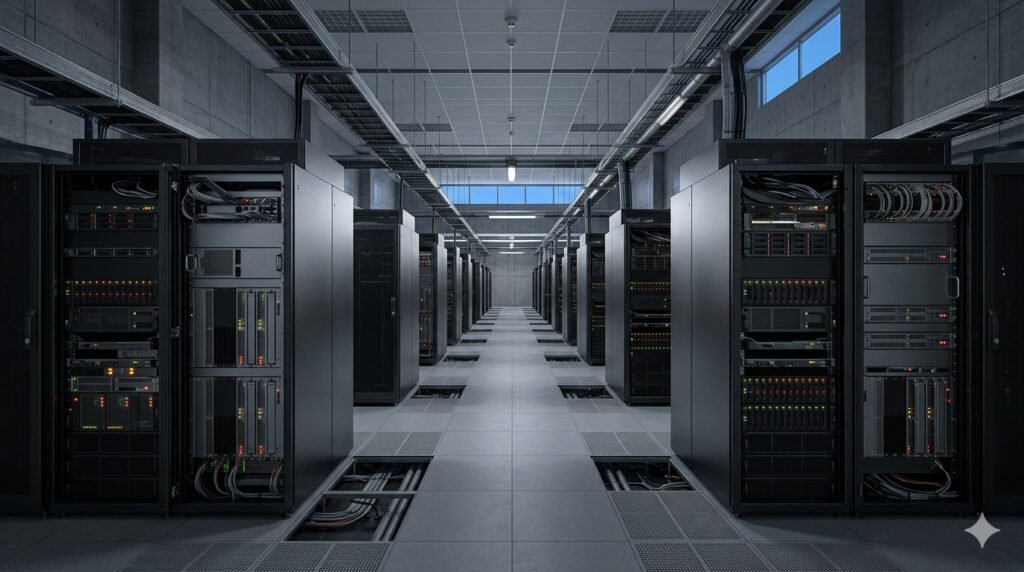
Multi-Tenant LoRA Deployment Principles for Scale
Architectural reality requires clear separation of concerns between base models and tenant micro-models to achieve predictable performance at scale.
Multi-tenant deployments must treat LoRA-adapted micro-models as low-latency, stateful services with distinct operational SLAs that map directly to compute, memory, and thermal budgets.
Tenant Isolation and Model Lifecycle
Design isolation that enforces resource capping and model lifecycle gating at the orchestration layer, preventing noisy neighbor effects across GPUs and PCIe fabrics.
Implement immutable micro-model artifacts and signed manifests for each tenant to enable fast rollbacks and deterministic provenance, aligning with enterprise audit and export-control requirements.
Scaling Patterns and Placement Strategy
Prefer a hybrid placement strategy that co-locates hot micro-models on pooled inference GPUs and cold or batch micro-models on lower-power nodes to control power draw and cooling.
Use tenant profiling to drive affinity rules: CPU-to-GPU ratios, GPU memory slab sizing, and PCIe/NVLink locality, to keep 95th percentile latency within contractual bounds.
The briefing synthesizes deployment strategy, hardware constraints, network fabric realities, and cost controls necessary to run multi-tenant LoRA micro-models at enterprise scale.
===INTRO: It targets CTOs, CIOs, principal architects, and FinOps leads preparing architectural reviews and RFPs that must balance silicon scarcity, power limits, and hyperscaler economics.
Architecture and Hardware Constraints for LoRA Micro-Models
A hardened architecture must map micro-model characteristics to specific silicon and cooling domains to avoid overprovisioning or thermal throttling during peak inference load.
Design decisions must tie LoRA parameter memory, optimizer state size, and batched inference footprint directly to GPU selection and rack-level power provisioning.
GPU Selection and Memory Topology
Select GPUs based on effective LoRA working set, not peak theoretical FLOPS, since many LoRA workflows are memory bound and sensitive to PCIe latency.
Prioritize GPUs with high-bandwidth memory (HBM) and robust NVLink topologies for multi-GPU model sharding, and size node RAM to accommodate simultaneous model contexts and pre/postprocessing buffers.
Thermal Dynamics and Power Budgeting
Plan rack-level power envelopes with headroom for transient inference spikes, accounting for regional grid constraints and data center PUE variances to avoid frequent power capping.
Allocate conservative power headroom per node and deploy firmware telemetry to correlate thermal throttling events with micro-model activation patterns for proactive rebalancing.
Network Fabric and Latency Controls
Operational performance depends on fabric design that minimizes tail latency for small, frequent LoRA inferences while retaining high throughput for batched fine-tuning jobs.
Network planning must assign priority lanes and QoS to inference traffic, separate from bulk model update and checkpoint replication flows.
Fabric Topology and QoS
Deploy spine-leaf fabrics with dedicated low-latency tiers for inference, instrumented with telemetry to enforce QoS and to shed or reroute flows during congestion.
Implement RDMA over Converged Ethernet (RoCE v2) for intra-cluster traffic where model sharding demands low CPU overhead, and reserve 10–25% of fabric capacity as buffer for control-plane spikes.
Edge Egress and Hyperscaler Integration
Negotiate hyperscaler egress and burst allowances aligned with multi-tenant patterns to avoid unpredictable costs during cross-region fallback or model aggregation.
Establish an on-premise edge cache for hottest micro-models to reduce egress and maintain sub-10 ms response goals for high-value tenants.
Security and Tenant Isolation Models
Security must enforce cryptographic separation of LoRA deltas, tenant data, and runtime secrets at both storage and memory layers to meet enterprise compliance.
Isolation strategies must combine MAC-level segmentation, kernel-level memory protections, and signed runtime attestations to prevent model snooping or parameter exfiltration.
Runtime Attestation and Key Management
Integrate hardware-backed attestation for nodes that host sensitive tenant micro-models, tying key release to verified execution contexts and measured firmware state.
Operate an enterprise KMS that supports per-tenant wrapping keys and short-lived tokens for inference sessions, ensuring minimal blast radius if a node is compromised.
Data Handling and Model Export Controls
Apply strict export-control tagging to LoRA artifacts and training traces, enforcing policy at CICD gates and during artifact promotion to production clusters.
Perform differential privacy and auditing on telemetry to detect misuse patterns, and maintain tenant-scoped audit trails for model adjustments and parameter merges.
Operational Governance and Costing for Micro-Models
Enterprises must budget LoRA deployments by mapping micro-model SLAs to explicit capital and operational line-items: reserved GPU capacity, storage IOPS, fabric QoS, and cooling allocations.
Financial governance must enforce chargeback models that reflect cold/warm/hot placement, preemptibility options, and egress pricing to align tenant behavior with infrastructure economics.
Cost Modeling and FinOps Controls
Build a chargeback model that measures cost per inference and cost per fine-tuning hour by GPU class and by placement tier, using amortized capital costs and PUE-adjusted power rates.
Use $0.001–$0.01 per inference tiers for common conversational micro-models as a starting range, validated against internal telemetry and negotiated hyperscaler spot rates.
Compliance Scorecard and Policy Automation
| LoRA Multi-Tenant Compliance Scorecard | Metric | Unit | On-Prem (Tier A) | Hyperscaler Spot | Edge GPU Pool | Score (1-10) |
|---|---|---|---|---|---|---|
| Per-inference latency (p95) | ms | 8 | 25 | 12 | 8 | |
| GPU-memory efficiency | GB | 48 | 40 | 24 | 7 | |
| Power draw per rack | kW | 35 | 28 | 12 | 6 | |
| Egress cost per GB | $ | 0.02 | 0.12 | 0.05 | 7 | |
| Orchestration maturity | score | 9 | 7 | 6 | 8 |
Use the scorecard to gate tenant on-boarding into higher tiers, automating policy actions for noncompliant micro-models, such as migration to lower-cost pools or enforced batching for cost recovery.
FAQ
How do you handle model drift for tenant micro-models without full re-training?
Model drift detection must run lightweight statistical probes on inference outputs and compare feature distributions to staged baselines, triggering LoRA re-tuning only when drift exceeds a calibrated threshold.
Operate a policy that differentiates cosmetic drift from label drift, using prioritized retraining windows to limit GPU contention and align with tenant SLAs.
What is the failure mode when NVLink topology is insufficient for sharded LoRA inference?
Insufficient NVLink bandwidth causes cross-GPU synchronization stalls, increasing tail latency and leading to GPU stalls under multi-tenant load.
Mitigate by limiting shard width, enabling tensor-swap to host memory as controlled degradation, and scheduling sharded inferences during low fabric utilization windows to preserve service-level targets.
How should FinOps allocate budget for variable hyperscaler egress in multi-region deployments?
FinOps must model regional egress as a stochastic cost vector, reserving contingency budgets and negotiating committed egress with suppliers tied to burst windows.
Implement automated rerouting to on-prem caches and edge pools under high egress pricing, while using predictive telemetry to shift heavy aggregation tasks to low-cost intervals.
What are the security trade-offs when sharing GPU pools between tenants?
Shared GPU pools reduce idle capacity but increase the attack surface via side channels or memory scraping across contexts, demanding stronger hypervisor and enclave controls.
Employ strict kernel namespace isolation, frequent memory zeroization, and hardware-backed attestations to balance cost efficiency with acceptable risk thresholds.
How do you recover from thermal-induced GPU throttling that degrades SLAs for critical tenants?
Thermal throttling requires fast tenant-aware remediation, including migrating hot micro-models to cooled spare nodes, shedding low-priority batches, and dispatching on-call infrastructure responses.
Automate telemetry thresholds to trigger tenant SLA compensations and capacity reallocation, while performing postmortem thermal mapping to prevent recurrence.
Conclusion: LoRA Deployment Strategy: Managing Multi-Tenant Micro-Models at Enterprise Scale
Strategic Takeaways: Align micro-model SLAs directly to hardware characteristics, network QoS, and power envelopes to avoid unpredictable costs and performance cliffs.
Architectural decisions must translate into financial commitments in procurement cycles, and operations must instrument telemetry to convert runtime behavior into chargeback signals.
Strategic Engineering and Financial Takeaways
Plan procurement against effective LoRA working set metrics, not theoretical FLOPS, and tie GPU class selection to a measurable cost-per-inference and cost-per-fine-tune baseline.
Enforce policy-driven placement, telemetry-backed automation, and FinOps chargeback so that tenant behavior funds incremental capacity rather than hidden capital overruns.
Technical Forecast (12 months)
Expect additive pressure on HBM availability and constrained NVLink inventories that will favor mixed node tiers and increased reliance on optimized LoRA parameter packing.
Operational trends will shift toward deterministic pricing with committed egress and more sophisticated on-prem plus hyperscaler hybrid controls, while telemetry-based autoscaling will drive marginal cost reductions.
End of briefing.
Tags: LoRA, multi-tenant, GPU-infrastructure, network-fabric, FinOps, model-governance, enterprise-deployment