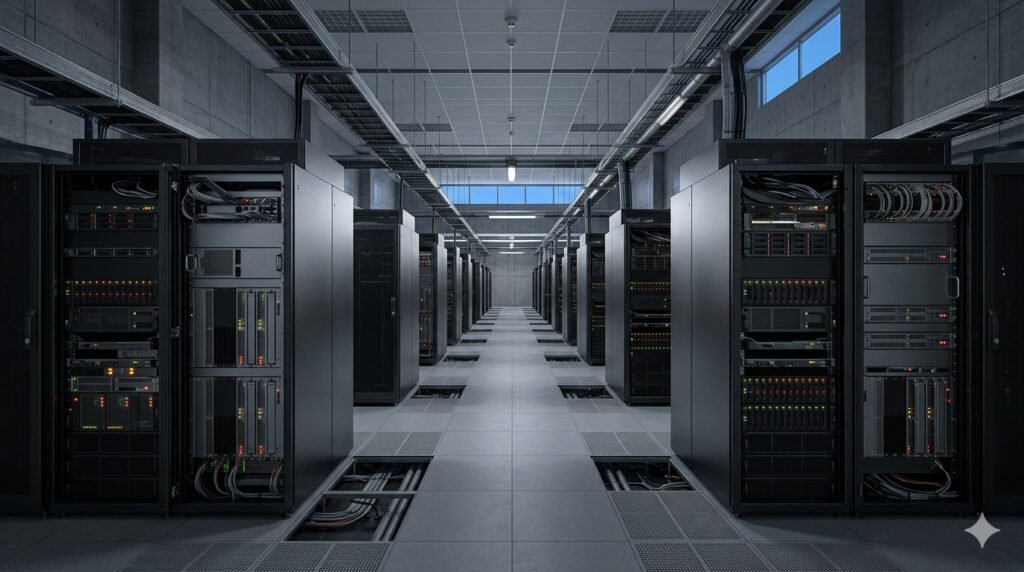
This white paper frames compute orchestration for multi-tenant AI clusters in the context of the evolution from classical Grid Computing to modern distributed systems spanning cloud, edge, and AI infrastructure. It presents concrete architecture patterns, resource management models, operational practices, and a practical roadmap for teams building and operating large-scale, shared AI compute fabrics. The goal is to give infrastructure architects actionable guidance grounded in engineering tradeoffs and measurable outcomes.
Orchestrating Multi-Tenant AI Clusters at Scale
Orchestrating multi-tenant AI clusters requires rethinking resource management from the node level up to global control planes. Modern AI workloads are heterogeneous, mixing long-running services, interactive inference, and bursty training jobs that consume entire GPUs or GPU partitions. A successful orchestrator must understand compute topology, device affinity, memory limits, and the difference between latency-sensitive inference and throughput-bound training tasks.
Scale amplifies policy choices into operational risk. For clusters in the hundreds to thousands of nodes, scheduling inefficiencies cause measurable waste: suboptimal packing drives underutilization of expensive accelerators, while poorly targeted preemption increases job restart rates. Instrumentation that reports GPU utilization, job queue latency, and placement failure rates lets teams quantify cost per model and prioritize scheduler enhancements based on ROI.
Architectural decisions shape tenant experience. A single shared control plane simplifies operations but requires robust multi-tenant isolation and quota systems. Conversely, carved-out tenant pools reduce noisy neighbor effects but increase management overhead. The architecture should balance isolation, utilization, and operational complexity using measurable SLAs and capacity planning driven by historical job profiles.
Resource Isolation, Scheduling, and Fairness Models
Isolation for AI clusters operates on several layers: compute, memory, network, and storage I/O. Containers with cgroups and namespaces remain the base for CPU and memory isolation. For accelerators, device-level controls such as NVIDIA MIG, vGPU, or SR-IOV for networking allow sharing while preserving performance bounds. NUMA-aware scheduling and topology-aware placement keep memory and PCI locality, reducing cross-socket penalties that can double training step time in worst cases.
Scheduling policies must match tenant priorities and workload characteristics. Fair-share schedulers that implement Dominant Resource Fairness (DRF) deliver robust allocation across CPU, GPU, and memory dimensions. Weighted fairness extends DRF with tenant-specific weights, which is useful when teams have purchased dedicated capacity. Preemption and eviction policies need strict, measurable rules; prefer graceful checkpointing and burst queues over blunt, opaque job killing to maintain throughput and reduce waste.
Measuring fairness is a data problem. Track headroom, achieved throughput, and tail latency per tenant and per job class. Use telemetry from node exporters, device management tools, and scheduler logs to compute fairness metrics weekly. When metrics deviate, adjust weights, quotas, or introduce dedicated node pools. Treat fairness tuning as repeatable experiments with A B comparisons and clear success criteria.
From Grid Computing to Modern Distributed AI Infrastructure
Grid Computing introduced the idea of federated batch execution and centralized queueing across administrative domains. Early systems focused on workload distribution across heterogeneous scientific clusters with a strong emphasis on throughput and fault tolerance. Those lessons remain relevant: decoupling job description from execution environment and maintaining a resilient scheduler are still core requirements.
Cloud platforms added elastic capacity, commodity virtualization, and persistent object storage. They shifted the economic model from static procurement to dynamic consumption. That change enabled on-demand scale but also increased system complexity with virtualization layers and service dependencies. For AI workloads, cloud scale provided access to specialized accelerators and data pipelines that Grid systems rarely addressed natively.
Edge infrastructure extends the model again by adding constrained devices and network partitioning. AI infrastructure now spans the entire spectrum: centralized training on GPU farms, distributed inference at the edge, and hybrid pipelines that stream data through cloud services. Modern orchestration must handle this continuum, managing placement, data movement, and observability across heterogeneous topologies and administrative boundaries.
Architecture Patterns for Multi-Tenant AI Workloads
Three dominant patterns work well in production. First, shared homogeneous pools provide high utilization for mixed training jobs when combined with strong scheduler packing and preemption controls. Second, dedicated tenant pools offer predictable performance and simpler security boundaries for regulated workloads or high-paying customers. Third, hybrid pools split resources by job class, maintaining separate low-latency inference clusters and high-throughput training clusters to tune each environment independently.
Network and storage architectures must support high fan-in and fan-out I O patterns. Use high bandwidth fabrics for training clusters, with topology-aware placement to reduce cross-rack traffic. For model serving, prioritize low tail latency and use edge caching where applicable. Data staging strategies such as warm caches for datasets and model checkpoints reduce time-to-start for training and improve scheduler throughput by reducing remote I O during startup.
Below is a simple comparison table that highlights differences across compute paradigms.
| Aspect | Grid Computing | Cloud | Edge | AI Cluster |
|---|---|---|---|---|
| Typical focus | Batch throughput | Elastic services | Latency and locality | Accelerator utilization |
| Isolation model | Job-level | VM/Container | Device-level | Container plus device plugins |
| Data locality | Varies | Centralized storage | On-device caching | Hybrid staging and caching |
| Elasticity | Limited | High | Constrained | Elastic at farm level, constrained per edge node |
Operational Challenges: Monitoring, Billing, and Security
Monitoring multi-tenant AI clusters requires correlated telemetry across compute, accelerator, network, and storage layers. Standard tools include Prometheus for metrics, node exporters for system stats, NVIDIA DCGM for GPU telemetry, and distributed tracing for data pipelines. Configure alerts on meaningful signals: GPU average utilization below 30 percent on training pools, scheduler queue growth, or repeated OOM kills indicate systemic issues rather than single-job failures.
Billing and chargeback need high-fidelity accounting that maps resource usage to tenants over time. Capture GPU hours, total GPU memory used, egress bandwidth, and storage I O. Use immutable job records to reconstruct costs for chargeback and to support spot pricing experiments. Accurate billing drives correct behavior: teams that see real costs will optimize batch sizes, checkpoint intervals, and data staging.
Security and compliance are non-negotiable in multi-tenant environments. Enforce role-based access control, strict network policies, and signed images. For accelerator sharing, validate that device partitioning prevents data leakage and side channels. Threat modeling must include model theft and exfiltration risks, and you should deploy automated policy checks that deny insecure configurations at admission time.
Deployment Roadmap and Implementation Steps
- Inventory and classify workloads by resource profile, latency sensitivity, and data locality requirements.
- Define tenant SLAs, quotas, and acceptable failure/eviction policies based on business needs.
- Build a telemetry stack that captures node, accelerator, scheduler, and network metrics with retention for at least 90 days.
- Implement a baseline scheduler with topology awareness and DRF fairness; run canary tenants to validate behavior.
- Introduce device partitioning technologies such as MIG or vGPU and validate isolation with performance tests.
- Automate cost accounting and billing tied to immutable job logs and resource usage metrics.
- Harden security through RBAC, network policies, and image signing; automate admission checks.
- Iterate on placement policies and autoscaling thresholds using measurable KPIs and A B testing.
Follow the roadmap iteratively. Each step should have acceptance criteria such as target utilization, maximum queue wait time, and security audit pass rate.
FAQ
Q: How do you decide between shared pools and dedicated tenant pools?
A: Base the decision on predictability and risk. Use dedicated pools when tenants require strict performance SLAs or separate compliance boundaries. Use shared pools when utilization and cost efficiency are the priority and when workloads tolerate preemption.
Q: Which fairness model suits mixed CPU and GPU workloads?
A: Dominant Resource Fairness extended with weights covers CPU, GPU, and memory dimensions effectively. It prevents a tenant that consumes all GPUs but few CPUs from starving others. Validate with historical workload traces before deploying changes.
Q: How do you measure and reduce noisy neighbor effects on GPUs?
A: Measure per-GPU utilization, memory bandwidth, and context switch rates. Reduce noisy neighbor effects by using device partitioning, NUMA-aware placement, and separating latency-sensitive jobs into their own pools.
Q: What telemetry retention and sampling rates are reasonable?
A: Keep high-resolution metrics (10s to 1m) for 7 to 30 days and downsampled aggregates for 90 days or more. Preserve job traces and audit logs for at least 365 days if compliance requires it.
Compute orchestration for multi-tenant AI clusters combines proven Grid Computing principles with cloud elasticity and edge considerations to meet modern AI demands. Successful systems apply layered isolation, topology-aware scheduling, and data-driven fairness models to balance utilization and tenant experience. Operational rigor in monitoring, billing, and security turns architectural choices into reliable service levels.
Adopt an iterative roadmap: classify workloads, instrument thoroughly, deploy baseline scheduling, and harden isolation and billing. Treat policy changes as experiments with defined metrics and rollback plans. Over time, automating admission checks, autoscaling, and cost signals will compress operational cycles and reduce manual tuning.
Looking ahead, expect orchestration to integrate tighter accelerator telemetry, cross-site placement across hybrid clouds, and improved support for privacy-preserving execution. The best teams will combine measurable SLAs, clear isolation boundaries, and continuous feedback loops to operate multi-tenant AI clusters at scale with predictable cost and performance.
Meta description: Compute orchestration strategies for multi-tenant AI clusters, combining Grid Computing heritage with cloud, edge, and accelerator-aware scheduling for predictable performance.
SEO tags: compute orchestration, multi-tenant AI, cluster scheduling, resource isolation, Dominant Resource Fairness, GPU sharing, infrastructure roadmap