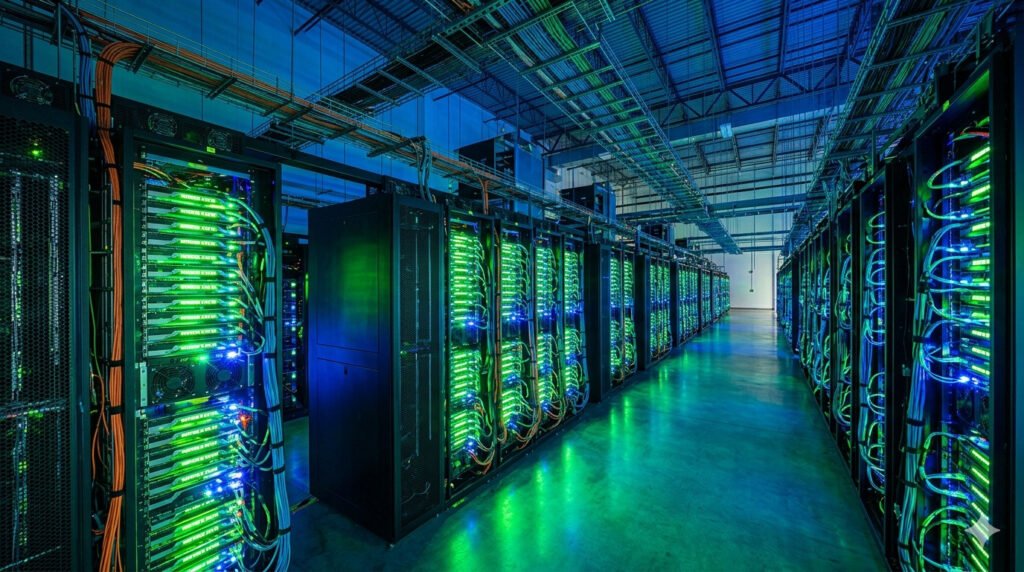
This white paper examines Automated Workflows e-Science on distributed platforms, tracing the engineering evolution from classical Grid Computing to modern cloud, edge, and AI-enabled infrastructures. It targets architects and platform engineers who must design reliable, scalable systems for data- and compute-intensive research. The content focuses on practical patterns, migration steps, and operational considerations.
Meta description: Automated workflows for e-Science using distributed platforms: engineering patterns, orchestration, roadmap, and operational best practices for scalable research infrastructure.
SEO tags: distributed computing, e-Science, workflow automation, cloud computing, edge computing, orchestration, fault tolerance
From Grid Computing to Distributed e-Science Platforms
Grid computing established an early model for federated resource sharing across administrative domains. It emphasized batch scheduling, large-scale MPI jobs, and central catalog services. Engineering choices prioritized policy-based access control and long-running jobs over interactive latency and fine-grained elasticity.
Modern distributed platforms shift resource management toward virtualization, containers, and serverless primitives that enable faster provisioning and denser utilization. Cloud providers introduced API-driven infrastructure, pervasive observability, and multi-tenant isolation. Edge nodes add locality for data ingestion and low-latency pre-processing, while AI workloads demand GPU orchestration and specialized networking.
The net effect for e-Science is a richer toolset but more complex integration surface. Researchers now orchestrate heterogeneous resources across cloud, on-premises HPC, and edge environments. Successful platforms require unified abstractions for compute, storage, data transfer, and policy enforcement that preserve reproducibility and provenance.
Automated Workflows for Scalable e-Science Platforms
Automated workflows codify study pipelines from data ingestion through analysis to publication. They enforce repeatability by capturing steps, parameters, and environmental state. Engineering these workflows around containerized tasks and artifact repositories reduces variability and speeds iteration cycles.
Scalable workflows decompose work into stages that map to different resource classes: edge preprocessing, cloud scale-out, and GPU-accelerated training. A scheduler with data locality awareness reduces transfer costs and latency. Workflow engines that support checkpointing and dynamic parallelism improve resiliency and resource efficiency.
Automation also accelerates operational tasks such as environment provisioning, data lifecycle management, and compliance reporting. Integrations with infrastructure-as-code and secrets management allow teams to apply consistent controls. Measuring throughput, task success rates, and cost per experiment becomes straightforward when automation records telemetry and provenance.
Orchestration, Monitoring, and Fault Tolerance Patterns
Orchestration centers on placing work where it runs best and recovering when failures occur. Controllers should support policies based on cost, latency, and data locality. Declarative specifications let operators reason about desired state and allow controllers to converge systems consistently.
Monitoring must capture both infrastructure metrics and workflow-level signals. Collecting resource utilization, queue depth, task durations, and data transfer metrics enables actionable alerts. Correlating logs and traces across components speeds root cause analysis and informs capacity planning.
Fault tolerance requires layered approaches: retries with exponential backoff, idempotent tasks, checkpointing, and task migration. For long-running experiments, periodic snapshots and provenance records prevent costly rework. Designing graceful degradation modes for partial failures preserves progress and provides predictable SLAs.
Infrastructure Roadmap for Migration and Scale
- Assess current workloads and measure task runtimes, data volumes, and peak concurrency. Baseline metrics inform sizing and policy choices.
- Containerize representative workloads and validate reproducibility. Establish artifact registries and runtime images with fixed dependencies.
- Deploy a workflow engine that supports DAGs, checkpointing, and heterogeneous executors. Integrate it with CI pipelines for experiment lifecycle control.
- Implement unified observability: metrics, logs, and traces with correlation IDs across workflow stages. Define SLOs and alerting thresholds.
- Introduce policy-driven orchestration: cost, locality, priority, and preemption rules. Test failover across availability zones and sites.
- Expand to edge nodes for data ingress and pre-processing. Validate secure data transfer and local caching strategies.
- Add GPU and specialized accelerators with vendor-aware schedulers. Monitor utilization and thermal constraints to optimize throughput.
This roadmap balances immediate wins with structural changes that reduce long-term operational cost. Each step includes validation gates and rollback plans to protect ongoing research activities.
Implementation Considerations and Best Practices
Design for loose coupling between workflow definitions and execution backends. Use standard interfaces such as REST or gRPC for control planes and well-defined artifact stores for inputs and outputs. This separation lets you swap schedulers or move tasks between cloud and on-premises without rewriting pipelines.
Enforce metadata and provenance at each stage. Use immutable identifiers for datasets and record configuration versions. Provenance enables reproducibility and simplifies debugging when results differ between runs. Automate retention policies so storage cost remains predictable.
Cost control requires telemetry tied to business logic. Tag tasks and datasets by project, owner, and funding source; aggregate cost by these dimensions. Implement burst policies to use spot or preemptible capacity for non-critical tasks while reserving stable instances for checkpointing and interactive work.
Comparison: Grid vs Modern Distributed Architectures
| Feature | Grid Computing | Modern Distributed Platforms |
|---|---|---|
| Resource model | Federated batch queues | Elastic, API-driven, heterogeneous |
| Scheduling | Central scheduler, long jobs | Declarative policies, autoscaling |
| Scalability | Constrained by static allocations | Elastic scaling with cloud and edge |
| Fault handling | Retry and manual restart | Checkpointing, idempotency, migration |
| Data locality | Manual transfers | Automated caching, edge preprocessing |
| Programming model | MPI, batch scripts | Containers, serverless, workflow DAGs |
This table highlights the practical engineering trade-offs. Modern platforms add flexibility and faster iteration but require stronger automation and observability disciplines to manage complexity.
Frequently Asked Questions
Q: How do I choose between running workflows on cloud GPUs versus on-prem GPUs?
A: Measure workload sensitivity to latency, dataset size, and interconnect. Use cloud GPUs for burst or experimental work and on-prem for stable, high-throughput training where data egress or compliance matters. Tag runs and compare cost per effective GPU hour.
Q: What level of checkpointing frequency balances overhead and recovery time?
A: Determine mean time to failure and task restart cost. Aim for checkpoint intervals that limit rework to an acceptable percent of runtime, typically 5 to 15 percent. Use incremental checkpoints to reduce I/O overhead.
Q: How do I ensure data provenance across multi-site workflows?
A: Use immutable object stores with content-addressable identifiers, attach metadata at generation, and record pipeline DAGs with exact runtime images. Centralize provenance in a queryable catalog and enforce automated ingestion at each workflow stage.
Q: Can existing Grid workflows be migrated incrementally?
A: Yes. Start by containerizing jobs and exposing them through adapters to the new workflow engine. Implement a hybrid scheduler that can route jobs to legacy queues while new tasks use the distributed platform, then migrate state and users iteratively.
Conclusion – Automated Workflows e-Science: Distributed Platforms
Automated workflows on distributed platforms transform e-Science by improving reproducibility, reducing time to insight, and enabling scale across cloud, edge, and specialized accelerators. Engineers should focus on modular orchestration, robust observability, and layered fault tolerance to manage complexity. A staged migration with clear metrics, provenance, and cost controls yields predictable outcomes and positions research infrastructure to support AI-driven experimentation and future hardware innovations.