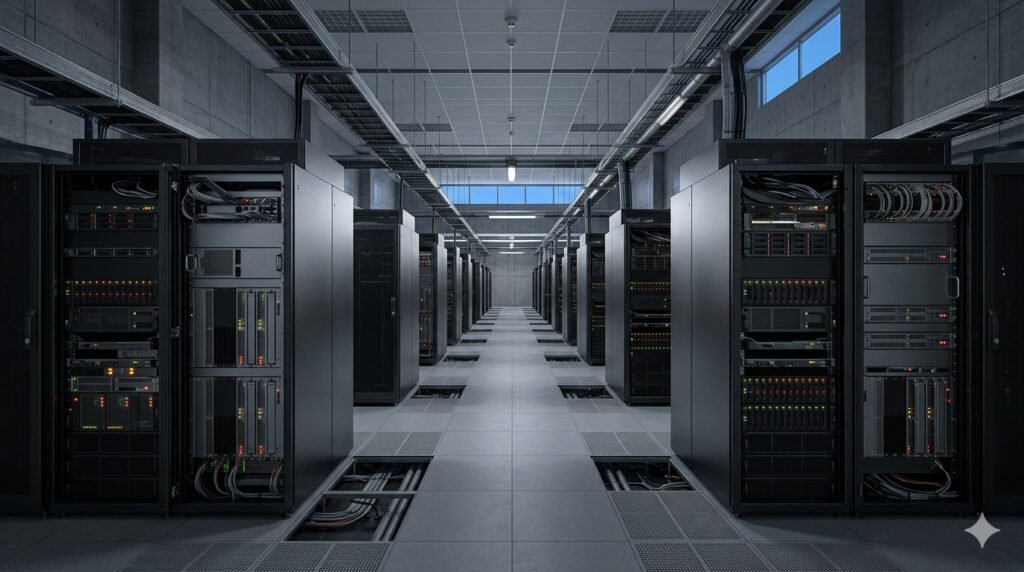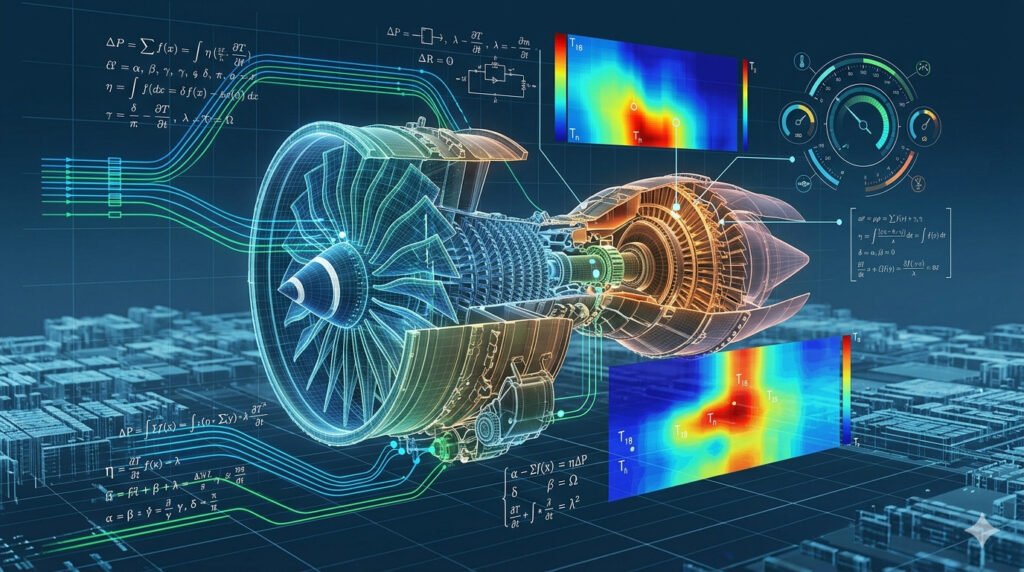
This white paper examines the evolution from classical grid computing to modern distributed systems and evaluates the choice between GPU vs. TPU for AI infrastructure. I describe architecture differences, operational trade offs, cost drivers, and an actionable roadmap for architecture teams planning to deploy scalable AI across cloud, edge, and data center environments.
The goal is practical guidance for infrastructure architects. I focus on measurable factors: throughput, latency, memory footprint, programmability, total cost of ownership, and integration complexity. The recommendations align with real-world engineering constraints and common enterprise objectives.
Evolution from Grid Computing to Modern Distributed Systems
Grid computing introduced the practice of federating compute and storage across administrative domains to solve large batch problems. Its scheduling and data federation patterns influenced cluster resource managers and early cloud orchestration. Over time the need to support lower-latency, stateful, and streaming workloads shifted architectures toward tightly coupled distributed systems.
Cloud systems added elasticity, multi-tenancy, and commoditized networking, while edge computing pushed processing closer to data sources. These changes created a heterogeneous resource environment where CPUs, GPUs, and specialized accelerators all play roles. Architects now design systems that align workload characteristics with the right class of processor rather than assuming one-size-fits-all.
AI workloads accelerated this evolution because they demand high throughput linear algebra and specialized memory access patterns. Choosing processors for AI requires thinking about training and inference separately, the model size and sparsity, and where data will reside. These constraints determine not only the hardware choice but also networking, storage, and orchestration design.
Hardware Fundamentals: GPUs and TPUs
GPUs are general purpose parallel processors with many SIMD-style cores and flexible memory hierarchies. They excel at dense matrix operations and provide mature ecosystems: CUDA, cuDNN, and broad framework support. Vendors supply multiple memory and interconnect options to scale training across nodes.
TPUs are purpose built accelerators optimized for large matrix multiply and convolution operations common in neural networks. They expose systolic array designs and often favor high bandwidth on-chip memory to reduce external memory traffic. TPU runtimes integrate tightly with specific frameworks and rely on compiler-level optimization to realize peak performance.
Both classes include multiple generations with incremental improvements in precision support, memory capacity, and interconnect bandwidth. The key architectural distinction is flexibility versus specialization: GPUs offer broader generality and a larger software ecosystem; TPUs deliver higher raw efficiency for workloads that match their computational model.
Comparing GPU and TPU Architectures for AI
When selecting processors, quantify expected throughput, model size, precision needs, and batch characteristics. GPUs provide strong single-card performance and a mature driver and tooling stack, which reduces integration risk. TPUs often deliver better throughput per watt and per dollar for compatible models but require more upfront benchmarking.
Memory topology and interconnect behavior matter for distributed training. GPUs pair well with NVLink, PCIe, and high-speed networking fabrics that reduce gradient synchronization overhead. TPU deployments usually depend on vendor-provided interconnect fabrics and may require specific pod-level design to achieve linear scaling.
Below is a simple comparison table that highlights core differences across common selection criteria.
| Characteristic | GPU | TPU |
|---|---|---|
| Optimal workload | Flexible: training, inference, graphics | Dense NN training and inference |
| Precision | FP32, FP16, BFLOAT16, INT8 | BFLOAT16, INT8 optimized |
| Memory per device | Typically larger with high bandwidth models | Smaller on-chip, high bandwidth caches |
| Programming model | CUDA, OpenCL, Broad framework support | Vendor compilers, TensorFlow-optimized |
| Scaling | NVLink/PCIe, multi-node MPI or NCCL | Vendor pods, integrated interconnect |
| Best use case | Research, heterogeneous workloads | Large-scale production NN workloads |
| Vendor ecosystem | NVIDIA, AMD | Google (TPU), cloud providers |
Performance and Cost Considerations
Measure performance using representative workloads rather than synthetic benchmarks. Throughput scales differently with batch size and model topology. GPUs often handle small-batch and mixed workloads better because of their memory and control flow flexibility. TPUs favor large-batch, highly regular matrix operations and can deliver higher device utilization on those patterns.
Cost analysis must include acquisition, energy, rack density, and software engineering overhead. TPUs can reduce energy and rack footprint for production models that match their strengths. GPUs reduce operational risk by supporting more frameworks and tooling, which translates to lower engineering cost for diverse workloads.
Also account for amortized cloud costs, reserved instances, and spot pricing. If you plan hybrid deployments, factor in cloud TPU availability and pricing constraints. For on-prem deployments compare amortized hardware costs against cloud TCO for projected utilization curves.
Operational and Integration Factors
Operator experience and existing toolchains drive integration effort. GPU-based stacks integrate with Kubernetes device plugins, common MPI libraries, and container ecosystems. That familiarity reduces rollout time and error rates across teams that already operate GPU clusters.
TPU integration often requires workflow changes: model compilation steps, specific runtime versions, and tighter coupling to certain frameworks. This can increase DevOps complexity but yield predictable performance once the pipeline stabilizes. Plan for a calibration phase where models are profiled and compiler flags are tuned.
Security, monitoring, and maintenance also differ. GPU servers allow conventional host-level monitoring and patching. TPU deployments may require firmware and cloud-managed lifecycle processes. Ensure your SRE and security teams have vendor-specific playbooks for firmware updates and incident response.
Infrastructure Roadmap
Begin with a clear mapping from workload types to performance metrics that matter to your business. Capture training time, inference latency, model size, and expected concurrency as primary inputs. Use these inputs to define hardware selection criteria.
Prototype and benchmark at realistic scale. Run a controlled set of training and inference jobs on candidate hardware, measure utilization, end-to-end latency, and cost per epoch or per inference. Use these measurements to select device mix and network topology.
Design the network and storage to match compute. For training-heavy clusters prioritize high bandwidth, low-latency fabrics and parallel file systems or sharded datasets close to compute. For inference favor lower-latency, memory-forward designs.
Automate deployment and lifecycle management. Adopt infrastructure-as-code for hardware, OS image management, and accelerator drivers. Integrate device plugins and autoscaling policies into your orchestrator to manage heterogeneous fleets.
Plan for mixed-processor pools. It is rare to obtain optimal TCO with a single processor type. Define routing policies to schedule workloads where they will run most efficiently and add fallback paths for overflow or compatibility constraints.
Monitor and iterate. Collect telemetry on device utilization, power draw, temperature, and application-level metrics. Feed these into cost models and capacity planning tools to refine procurement and scaling decisions.
FAQ: Technical Questions from Architects
Q: Which workloads should I always benchmark on both GPU and TPU?
A: Benchmark large-scale dense models like transformer training, convolutional models for vision, and representative inference pipelines. Include varying batch sizes and sequence lengths to capture memory and synchronization behavior.
Q: How should I plan for mixed precision and numeric stability?
A: Test FP16 and BFLOAT16 workflows early. Use loss scaling and verify convergence across precisions. Some training recipes require adjustments to optimizers and learning rates when moving to lower precision.
Q: What are the networking implications for distributed training?
A: Expect communication to dominate at scale. Use NCCL or equivalent for GPUs and vendor-provided collective libraries for TPUs. Design for high-bandwidth low-latency fabrics and minimize cross-rack gradients where possible.
Q: Can I reuse existing orchestration and CI/CD for TPUs?
A: Partially. CI/CD can reuse many pipeline elements, but you must add compilation steps and validate runtime compatibility. Update deployment automation to handle TPU-specific provisioning and monitoring.
Conclusion – GPU vs. TPU
Selecting between GPU and TPU is a capacity planning exercise informed by workload characteristics and operational constraints. GPUs offer flexibility, broad ecosystem support, and lower integration risk. TPUs provide strong efficiency for workloads that map to their computational model and can reduce operational cost at scale when used for compatible models.
The practical approach is hybrid: use prototypes to quantify trade offs, deploy mixed pools, and route jobs to the best-fit processor. Invest in benchmarking, automation, and telemetry to convert measurements into procurement and scheduling decisions.
Looking forward, expect both processor classes to evolve with improved precision support, memory hierarchies, and interconnects. Architects who prioritize measurable outcomes, continuous profiling, and modular orchestration will be best positioned to adapt as hardware and models change. For further reading discover Understanding TPUs vs GPUs in AI: A Comprehensive Guide by Datacamp